Quick Links

What is child and family therapy?

Children who have experienced trauma, loss, or disruption carry those experiences with them, sometimes in ways they can’t yet put into words. Therapy gives them space to process what they’ve been through, build coping skills, and start to heal. Ariel’s therapy team works with children, youth, and people with intellectual and developmental disabilities (I/DD) of all ages, genders, and cognitive abilities. The most common reasons people come are anxiety, depression, and trauma, including trauma rooted in removal and foster care placement.

The Ariel Difference

Ariel brought therapy in-house because the children in its care needed it. At one point, most children in Ariel’s foster homes were seeing a therapist, and finding a qualified one in this region was getting harder. So Ariel built its own team.

That team knows foster care from the inside. Many of Ariel’s therapists have worked in the child welfare system, and they understand the layers a placement adds to a child’s life: the disruption, the complicated emotions around family time, the work of learning to trust again. So less time goes to context, and more goes to the work that helps.

That understanding reaches past the child. Foster parents get a therapist’s view of what they’re seeing at home, birth parents working to bring their children home can find support of their own, and a foster family saying goodbye to a child can get help with the loss.

Because therapy sits inside the same organization as foster care and family time, therapists can talk through what a child needs as it comes up. When a bedtime routine starts unraveling, a case manager can talk to the child’s therapist down the hall the same day. After a hard session, the therapist walks the child out to the foster parent’s car and takes sixty seconds to share what matters. For a child who has learned not to count on things staying the same, steady appointments with a therapist who shows up can be where trust begins.
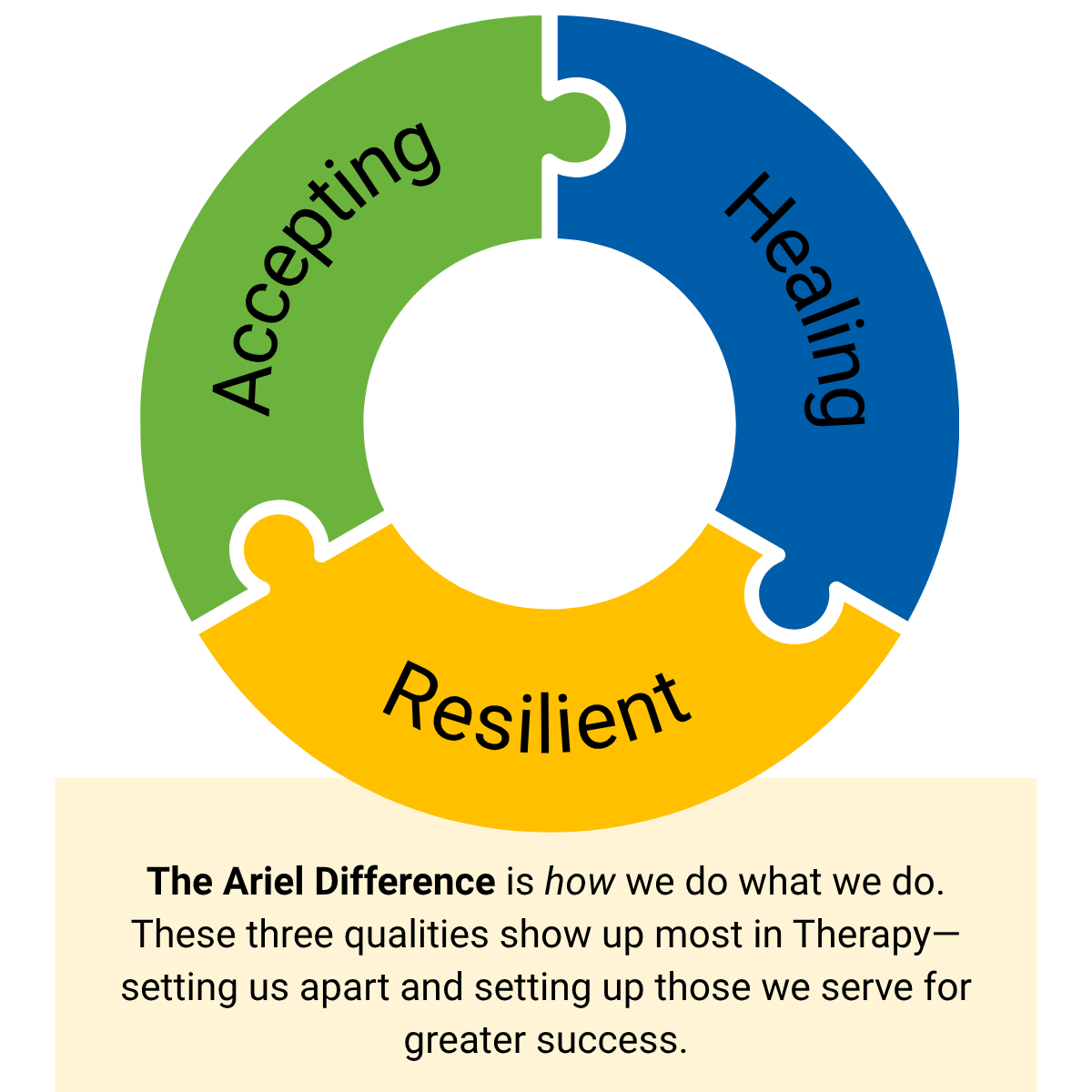
The Ariel Difference in Child and Family Therapy: Accepting, Healing, Resilient

Types of child and family therapy

Ariel’s therapy team uses evidence-based approaches tailored to each person’s needs, developmental stage, and therapeutic goals. Children, youth, and adults with I/DD may take part in one or a combination of these approaches, based on what will serve them best.

  • Individual Therapy | One-on-one sessions where a person works with a therapist on what they’re facing, builds coping strategies, and works toward personal goals, in a safe, confidential space.

  • Family Therapy | Sessions that bring family members together: birth parents, foster parents, siblings, or other caregivers. The focus is on improving communication, strengthening relationships, and developing shared strategies for supporting a child’s healing.

  • Group Therapy | Small groups where people with similar experiences meet regularly to share, learn, and grow together. Led by a trained therapist, group therapy offers peer support and the comfort of knowing you’re not alone. Ariel currently offers Dialectical Behavior Therapy (DBT) groups for children and youth ages 5–14, and some groups also serve birth families.

A therapist talking with a teenage boy in an office
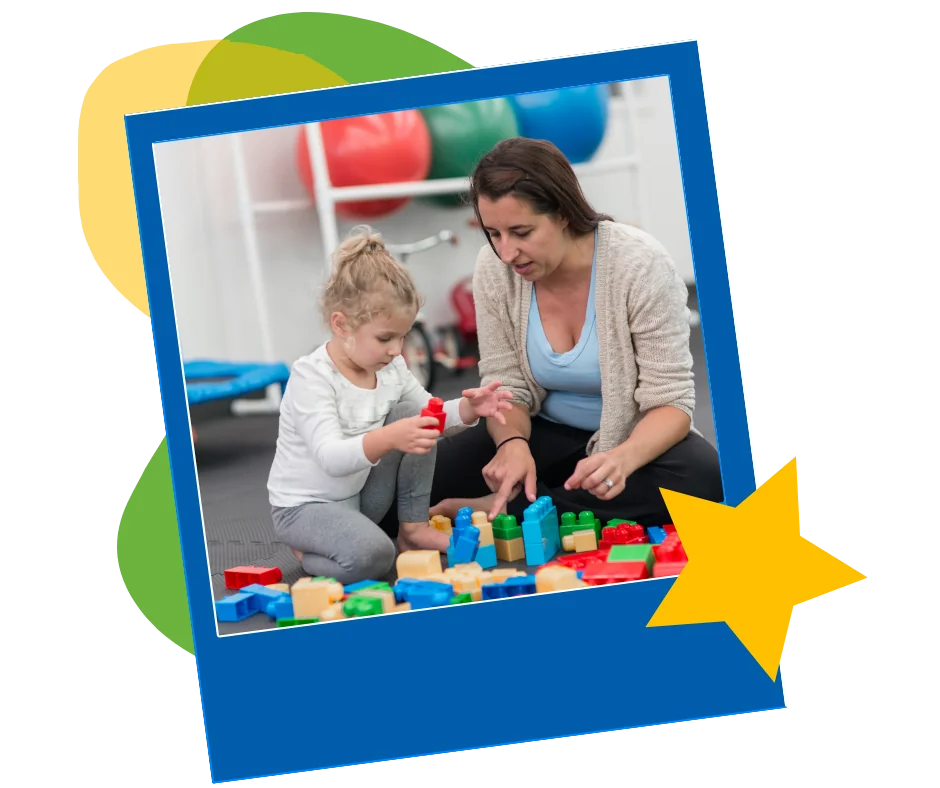
A therapist and a young child playing with blocks on the floor

Specialized approaches

The team also includes therapists trained in these approaches:

  • I/DD-Specific Therapy, Evidence-Based | Approaches adapted for people with intellectual and developmental disabilities, shaped around each person’s cognitive, emotional, and behavioral needs to support mental health and quality of life.
  • Dialectical Behavior Therapy (DBT), Evidence-Based | Builds skills in four areas (mindfulness, distress tolerance, emotion regulation, and interpersonal effectiveness) to help people manage intense emotions, reduce self-harm, and improve relationships. It’s often used for depression, impulsive behavior, and suicidal thoughts. Watch a quick overview.
  • Cognitive Behavioral Therapy (CBT), Evidence-Based | Helps people notice unhelpful patterns in their thinking and behavior and practice new ones, building problem-solving skills, confidence, and practical ways to cope with what’s happening now.
  • Trauma-Focused CBT (TF-CBT), Evidence-Based | A version of CBT built for trauma. People work through trauma-related symptoms step by step, often with a caregiver involved, to ease the emotional and behavioral reactions that can follow a traumatic experience.
  • Eye Movement Desensitization and Reprocessing (EMDR), Evidence-Based | While a person recalls a distressing memory, the therapist guides bilateral stimulation (eye movements, tapping, or pulsing devices) to help the brain reprocess it so it carries less distress. EMDR was first developed to treat trauma.
  • Child-Centered Play Therapy (CCPT), Evidence-Based | Play is how young children express what they can’t yet say. The child leads and the therapist follows, in a safe space where the child can explore feelings and build coping skills at their own pace.
  • Trust-Based Relational Intervention® (TBRI®), Evidence-Based | A relationship-based model for children who have experienced trauma, built on three principles: empowering, connecting, and correcting. It helps caregivers and therapists meet a child’s needs in ways that build trust.

Therapy alongside other support

Therapy at Ariel often happens alongside foster care, family time, mentoring, or behavioral support. When it does, the people on a child’s team talk to each other, so families don’t have to tell the same story to each of them, and what’s happening at home or school can shape the next session. Only what’s relevant to care gets shared, and some conversations, like a therapist meeting with a mentor, happen only with a signed release.

Therapy also works on its own, for children and families who come to Ariel for therapy alone.

Where we provide child and family therapy

Ariel’s therapists see children, youth, and families in person on Colorado’s Western Slope, Monday through Friday. Working in person keeps therapists close to the case managers and family time staff who know each child, and it gives each person the steady routine therapy depends on.

If you live outside the area Ariel’s therapists serve, your regional HQ can help you find a provider closer to home.

How to get started with child and family therapy

How you connect with Ariel’s therapy team depends on your situation.

If your child is in Ariel’s foster care program | Talk to your case manager. They coordinate directly with the therapy team, can talk through whether therapy is a good fit, and can set up the first steps.

If you’re a county caseworker or Guardian ad Litem (GAL) | Contact your regional HQ to talk through therapy for a child or family you’re supporting.

If you receive Ariel’s Adult Services | Visit our Adult I/DD Therapy page, or talk with your case manager.

For everyone else | Ariel accepts Medicaid. Contact your regional HQ and ask about therapy, and the team will walk you through next steps.

Ariel’s therapy team focuses first on the children and families in its foster care and waiver programs, and they take scheduling priority. There’s usually a waitlist, and the team fits others in when it can. If the timing doesn’t work, we won’t leave you without options.

Community providers on the Western Slope that Ariel often refers to include:

Frequently Asked Questions (FAQs)

If you don’t find what you’re looking for below, feel free to ask your question via our Contact Form.

Families in Ariel’s foster care program can start with their case manager. If you’re seeking therapy on your own, contact your regional HQ and ask about therapy, and the team will walk you through the paperwork and scheduling.

Ariel accepts Medicaid. Private pay may be available in some situations; ask when you call.

Usually, yes. Children and families in Ariel’s foster care or waiver programs take scheduling priority, and the team fits others in when it can. If the timing doesn’t work, Ariel can share community providers it often refers to, and your regional HQ can help if you’re outside the area.

Ariel’s therapy team works with children, youth, and adults with I/DD of all ages and all genders. For children in foster care, therapy can begin very young, including toddler-age children using play-based approaches. There is no upper age limit for adults with I/DD.

Sessions are in person on the Western Slope. Ariel uses telehealth occasionally, when it’s the better fit.

Sessions are scheduled Monday through Friday at Ariel’s office. Weekend and in-home sessions aren’t part of regular scheduling.

During your initial intake conversation, the team will ask about your availability and work to find a consistent time that suits both you and your therapist. Once that’s established, there’s not much to manage. You both know that Thursdays at 4 p.m. are yours, for example. When illness or other commitments come up, you and your therapist will work out an alternate plan.

The first session focuses on completing required Colorado state paperwork, discussing current challenges and goals, and getting to know one another so we can best support you.

Please let us know as soon as possible if you need to cancel or reschedule. We understand that things come up, but two consecutive no-shows may result in the loss of your preferred appointment time.

SimplePractice is Ariel’s confidential online portal for paperwork and account information. You may receive information about accessing it once services begin. If you have questions, ask your therapist.

Ariel’s therapy team is made up of master’s-level therapists with specialized training in trauma-informed care. Many on the team have worked directly in the child welfare system, so they’ve seen the foster care world from the inside and bring that context to their work. The team welcomes people of all backgrounds, identities, and abilities.

We do our best to accommodate therapist preferences while also considering the best fit for your specific needs and goals.

Yes. During our initial conversation, we’ll ask about your preferences so we can best match you with a therapist.

Each session is scheduled for one hour. How long someone participates in therapy depends on what they’re working through and how often they can come. Some people benefit from a few focused months; others need longer-term support. Your therapist will discuss goals and progress with you throughout.

Sometimes. Depending on the approach, your therapist may share tools or skills to practice between sessions, and caregivers may get ideas to try at home. Your therapist will talk through what fits.

It depends on the therapeutic approach and what’s best for the child. Some sessions are individual; some include family members. The therapist will discuss what makes sense for each situation.

Therapists are trained to work with reluctance, and it looks different at different ages. For younger children or those who communicate without words, play gives them a way in that doesn’t depend on talking. For older children and teenagers, therapists may use structured activities or skill-building exercises, or spend time building the relationship before going deeper. The goal is to meet the child where they are and move at a pace they’re ready for.

Progress looks different for everyone. Some signs include better emotional regulation, improved relationships, decreased behavioral challenges, or an increased ability to talk about experiences and develop healthier coping strategies. Your therapist will discuss goals and track progress with you.

By and large, people feel better overall. They develop stronger coping skills, have deeper connections in their relationships, and carry more hope about what’s ahead. Many begin to engage more with their community and find daily living tasks easier to manage. For children, families often notice better emotional regulation, calmer behavior at home, and a greater ability to talk about difficult experiences.

Therapy addresses underlying emotional and psychological needs, helping people process experiences and build coping skills. Behavioral services focus on observable behaviors and teaching specific strategies to manage them. The two often work together: therapy addresses the why; behavioral support addresses the what and how.

Yes. Ariel follows the Health Insurance Portability and Accountability Act (HIPAA) and protected health information (PHI) requirements and treats your information with care. Exceptions include situations involving danger to self or others, suspected abuse, or a court subpoena. Within Ariel, only information relevant to your care is shared among the people coordinating it.

No. Ariel doesn’t provide reunification therapy, which is a specialized service, often ordered by a family court. Families working toward reunification can still take part in family therapy.

No. Ariel’s therapists don’t make custody recommendations or testify as expert witnesses.

Ariel isn’t a crisis counseling center. If you’re in crisis, call or text 988, call 911, or go to the nearest emergency room.

If you or someone you know is experiencing thoughts of suicide, please contact the Suicide and Crisis Lifeline by calling or texting 988, or call 911 for immediate emergencies. For a comprehensive list of mental health and crisis resources, visit suicidepreventionmc.org/resources.

For challenges like food insecurity, housing instability, or job loss, community resources are available at 211colorado.org (statewide) or wc211.org (Western Slope).

Stories on this site are about real people. To protect their privacy, names, details, and images may have been changed.