What is youth mentoring?
For many children in foster care or navigating family instability, trusted relationships with adults have been hard to come by—or haven’t lasted. Ariel’s Youth Mentoring program pairs children and youth ages 6–18 with trained mentors who show up consistently, build the relationship first, and work toward goals that actually matter to that young person—whether that’s learning to manage emotions, exploring new interests, building life skills, or simply having someone reliable in their corner. The program serves children in foster care, adoption, and living at home with their birth families, and goes by two names: Youth Mentoring publicly, and Community Support Services (CSS) in billing and county professional contexts.


Types of Youth Mentoring / Community Support Services (CSS)
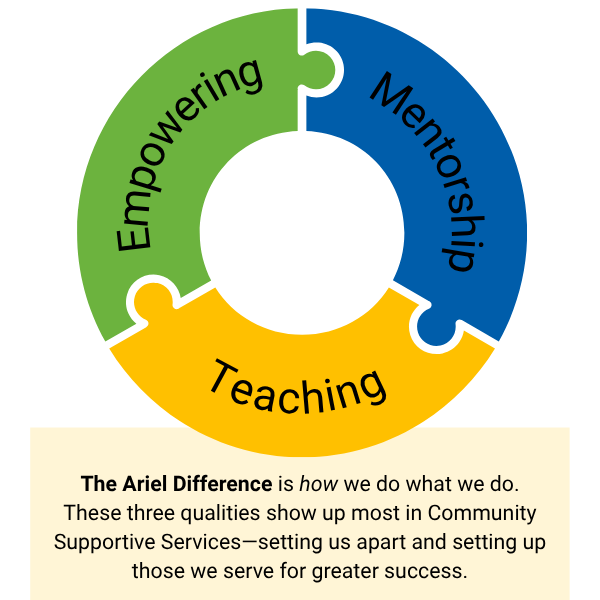
Every mentoring relationship starts with a meet and greet—the mentor, the youth, and the family together, typically at home. From there, sessions are built around two goals at a time: drawn from the youth’s treatment plan, from their therapist if coordination is in place, and from the youth themselves. Goals are woven into activities naturally; the activity doesn’t always look like the goal directly. A youth building self-confidence might try rock climbing. A youth working on life skills might cook a meal.
Beyond one-on-one mentoring, the CSS program includes a range of additional supports.
- One-on-one mentoring | Typically once a week, two hours per session, in the community or at Ariel’s facility
- Peer support group | Weekly group activities for peer connection and socialization
- Independent living skills | Cooking, budgeting, job skills, and other practical skills taught in real-life contexts
- Community access | Local partnerships that open doors to events and activities at little or no cost
- CHRP/CES waiver services | Hourly respite and community connections for eligible children and youth; up to 6–8 hours per week depending on authorization
- Summer Program | Structured activities, peer relationship building, and mentoring during summer months
- Behavioral support | Trauma-informed support for youth with behavioral challenges
- Therapy coordination | Mentor and therapist coordination to align on goals when a youth is receiving both services
Mentoring is about the relationship, not the activity. Sessions don’t need to involve spending money or going somewhere impressive. Some youth take time to engage; families are encouraged to give it at least a couple of months. If the match genuinely isn’t working after real effort, a different mentor can be requested.
Availability of individual services depends on current program capacity—contact the Grand Junction office with questions about your child’s specific situation.
How to get started
Youth Mentoring is a referral-based program. Referrals typically come from DHS/child welfare, physicians, therapists, school professionals, and other local support agencies.
If you’re a family and you’re not sure where to start, call our main office—staff can walk you through whether your child may be eligible and what a referral looks like for your situation. Some families want to talk with a person before anything else—that works.
Call us at (970) 245-1616 or reach out through our contact form.
Interested in becoming a mentor? Contact us for more information about mentoring opportunities.
Frequently Asked Questions (FAQs)
If you don’t find what you’re looking for below, feel free to ask your question via our Contact Form.
>> Unless otherwise noted, all images and names represent real foster children and parents but actual images and names have not been used for privacy reasons. <<