What is child and family therapy?
Children who have experienced trauma, loss, or disruption carry those experiences with them, sometimes in ways they can’t yet put into words. Therapy gives them space to process what they’ve been through, build coping skills, and start to heal. Ariel’s therapy team works with children, youth, and people with intellectual and developmental disabilities (I/DD) of all ages, genders, and cognitive abilities. The most common presenting concerns are anxiety, depression, and trauma, including trauma rooted in removal and foster care placement. At the heart of our approach is one foundational belief: behavior is communication about what someone has been through, not who they are.
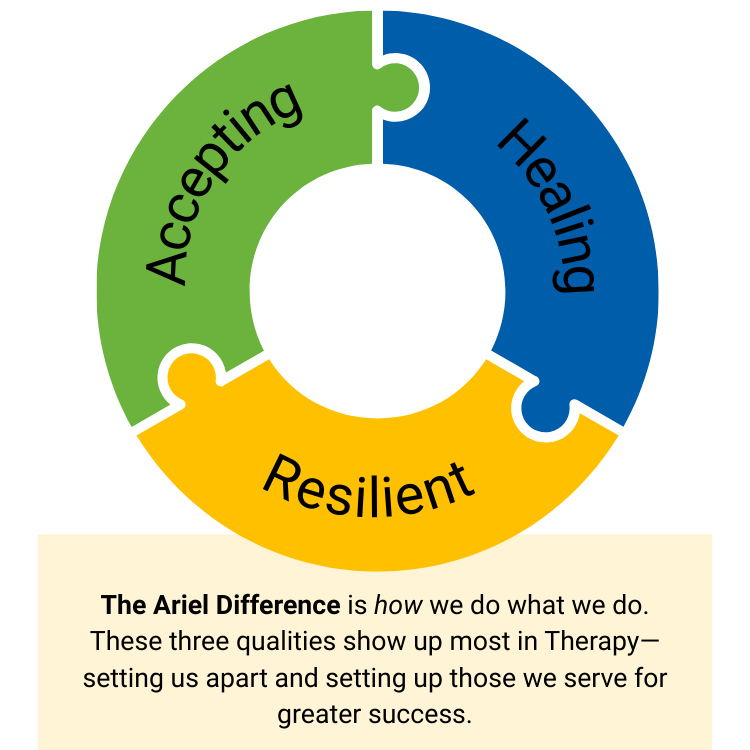
The Ariel Difference
Many on Ariel’s therapy team have worked directly in the child welfare system. They’ve seen what removal does to children and families, and they understand the layers a foster care placement adds to a child’s life: the disruption, the complicated emotions around family time, the work of learning to trust again. That lived professional experience means less time spent on context and more time spent on the work that actually helps. When Ariel recognized how difficult it had become for families in this region to access qualified therapists, the decision was clear: bring therapy in-house, so the children and families we serve don’t have to look elsewhere for something this essential.
Being part of the same organization as foster care and family time means collaboration happens in real time, not through scheduled handoffs. When a bedtime routine starts unraveling, a case manager can walk down the hall and talk to the child’s therapist the same day. When a session is hard, the therapist walks a child out to the foster parent’s car and takes sixty seconds to share what matters. It’s the kind of coordination that’s genuinely difficult to replicate when services are spread across different organizations. When a child or family needs more intensive support, the team can adapt—therapists, case managers, and coordinators working together more closely for as long as that’s what’s needed.
For children in therapy, consistency isn’t incidental — it’s part of the treatment. Appointments are predictable. Therapists show up. For a child who has learned not to count on things staying the same, that reliability is not a small thing.
Types of Child and Family Therapy Services
Ariel’s therapy team uses evidence-based approaches tailored to each person’s needs, developmental stage, and therapeutic goals. Children, youth, and adults with I/DD may participate in one or a combination of these approaches based on what will serve them best.

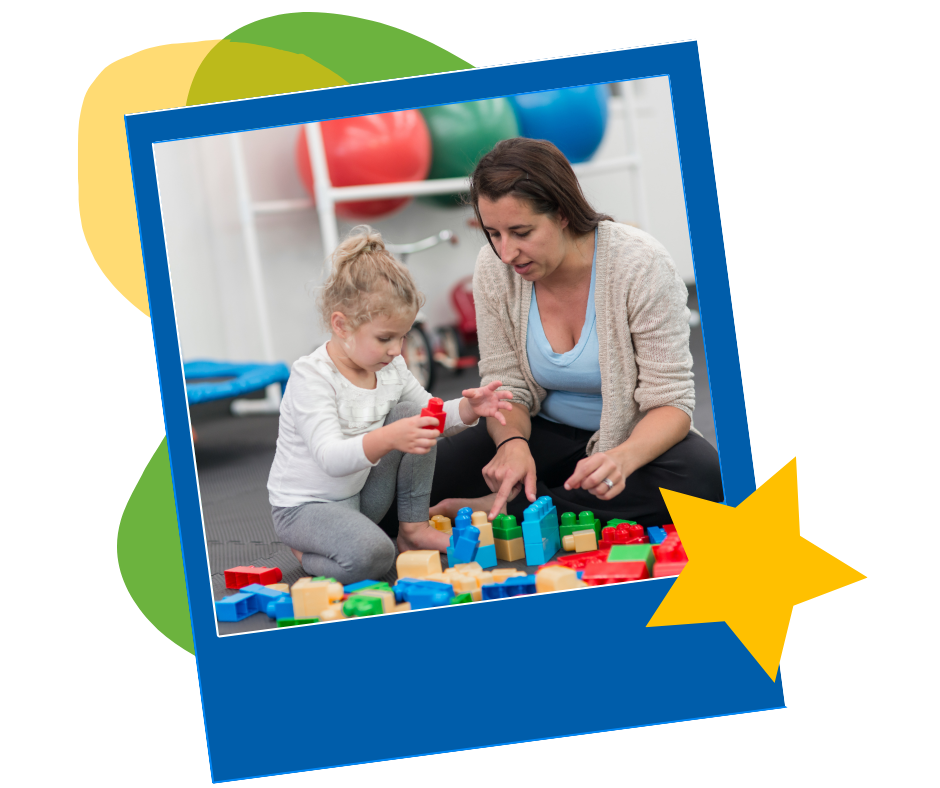
Additionally, our team includes staff trained and specializing in the following modalities:
- I/DD-Specific Therapy, Evidence-Based | Specialized approaches designed for children, youth, and adults with intellectual and developmental disabilities, addressing unique cognitive, emotional, and behavioral needs through adapted techniques that support mental health and quality of life.
- Child-Centered Play Therapy (CCPT), Evidence-Based | Leverages play as the primary medium for expression and healing, allowing children to explore emotions and develop coping skills at their own pace. The therapist creates a safe, accepting environment where the child leads and the therapist follows.
- Dialectical Behavior Therapy (DBT), Evidence-Based | Helps individuals manage intense emotions, reduce self-harm behaviors, and improve relationships through skills in mindfulness, distress tolerance, emotion regulation, and interpersonal effectiveness. Particularly effective for those experiencing depression, impulsivity, or suicidal thoughts.
- Cognitive Behavioral Therapy (CBT), Evidence-Based | Focuses on identifying and changing unhelpful thought patterns and behaviors that contribute to mental health challenges. Clients learn practical problem-solving skills, build self-confidence, and develop strategies to cope with difficult situations in the present.
- Trauma-Focused CBT (TF-CBT), Evidence-Based | Adapts CBT specifically to help individuals and their caregivers process and overcome trauma-related symptoms. This approach reduces negative emotional and behavioral responses following traumatic experiences through gradual, supportive work.
- Eye Movement Desensitization and Reprocessing (EMDR), Evidence-Based | Uses bilateral stimulation — eye movements, tapping, or pulsing devices — while recalling distressing memories to facilitate emotional healing. Originally developed for trauma, EMDR helps the brain reprocess difficult experiences in a less distressing way.
- Trust-Based Relational Intervention® (TBRI®), Evidence-Based | A therapeutic model designed to meet the complex needs of children from hard places, addressing trauma through empowering, connecting, and correcting principles that support healing within relationships
Additional support available with Child and Family Therapy
Therapy at Ariel doesn’t operate in isolation. The same organization that provides therapy also coordinates foster care, family time, mentoring, and behavioral support — so the people working with your child or family are already in conversation with one another.
Where we provide Child and Family Therapy
Ariel’s therapy services are provided in person at our Grand Junction office, Monday through Friday. In-person care is intentional: it makes real-time collaboration with case managers and family time supervisors possible, and it gives patients the consistency that matters most in therapeutic work.
Grand Junction 2938 North Avenue, Suite G Grand Junction, CO 81504 (970) 245-1616
Telehealth sessions are available when appropriate and as needed, for example in cases of illness, rural access barriers, or specific diagnoses.
If Ariel isn’t able to accommodate you on a timeline that works, we won’t leave you without options. For those in the Grand Junction area, community providers we often refer to include:
- Counseling and Education Center (CEC) — (970) 243-9539
- Health Solutions West — (877) 603-7045
- Hilltop Community Resources — (970) 244-0562
If you’re outside the Grand Junction area: Colorado has a strong network of mental and behavioral health providers, and Ariel can help connect you with the right fit for your situation. Reach out to your Ariel case manager as a first step.
How to get started with Child and Family Therapy Services
How you connect with Ariel’s therapy team depends on your situation.
If your child is in Ariel’s foster care program: Talk to your case manager. They coordinate directly with the therapy team and can discuss whether therapy is appropriate and arrange the initial steps.
If you’re receiving Adult Services through Ariel: Speak with your case manager about therapy options. Depending on your situation, therapy may be covered through waiver programs.
If you’re a county caseworker or Guardian ad Litem (GAL): Contact Ariel directly at (970) 245-1616 or use our contact form to discuss therapy for a child or family you’re supporting.
Other access options: Ariel also accepts Medicaid and private pay for those seeking therapy independently or through other community partners. Call (970) 245-1616 and ask to speak with the Therapy Supervisor; they’ll walk you through the required paperwork and help with scheduling.
There’s typically a waitlist — we wish that weren’t the case. Clients connected to Ariel’s foster care or waiver programs take scheduling priority, but that doesn’t mean we won’t try to fit others in when we can. If the timing genuinely doesn’t work, we won’t leave you without options. We’ll connect you with other providers rather than send you off on your own.
Frequently Asked Questions (FAQs)
If you don’t find what you’re looking for below, feel free to ask your question via our Contact Form.
>> Unless otherwise noted, all images and names represent real people but actual images and names have not been used for privacy reasons. <<