What are Behavioral Services?
Behavioral services help individuals express themselves in safe, healthy ways by replacing challenging behaviors with positive ones through skill-building and emotional regulation. Available for individuals age 16 and up with intellectual and developmental disabilities (I/DD), these services use evidence-based techniques to reduce stress, promote safety, and support lasting growth. Because behavior is communication, our approach focuses on understanding what individuals are trying to express and teaching them more effective ways to meet their needs.
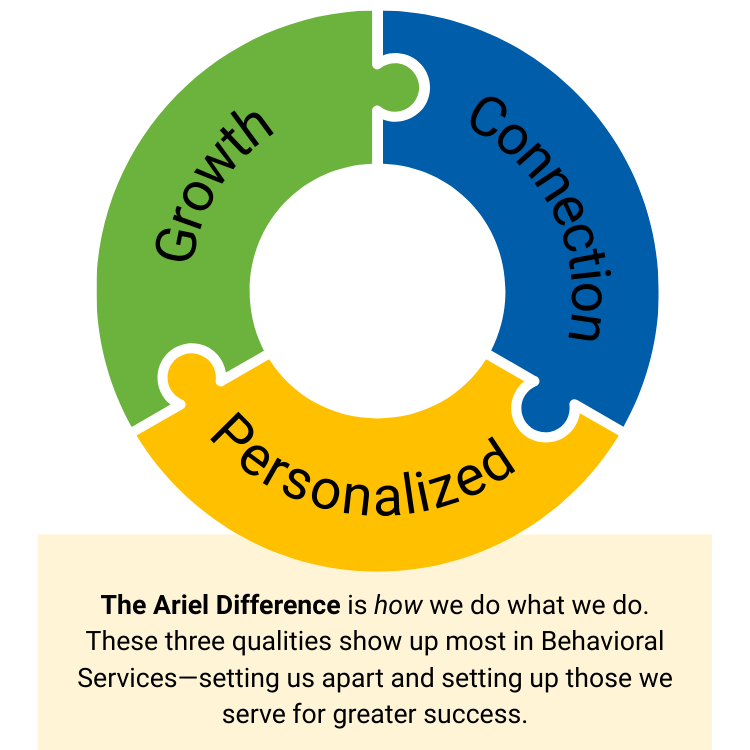
The Ariel Difference
Behavior tells a story—and at Ariel, the focus is on understanding that story with curiosity, empathy, and respect. Rather than simply responding to challenging behaviors, our approach recognizes the impact of past experiences and uses this understanding to reduce stress while promoting growth. Every intervention begins with the least intrusive strategies, building trust and safety before introducing change.
Our team brings specialized expertise through proven Applied Behavior Analysis (ABA) techniques, with Registered Behavior Technicians (RBTs) and a master’s-level Board-Certified Behavior Analyst (BCBA)—one of only two on the Western Slope. This clinical excellence combines with close family collaboration to ensure positive changes extend beyond sessions into daily life. The result? Learning spaces where individuals want to be, where growth feels natural, and where real-world progress happens on each person’s own terms.
Types of Behavioral Services
Each plan is personalized to meet the unique needs of the participant, called a “Member” in Medicaid language, and their support team. Here are some of the services we offer:
- Behavior Assessment & Planning | We look at the “why” behind behaviors and create a custom plan to support positive changes. This might include teaching frustration tolerance or social interaction skills.
- Skill Building | From communication and hygiene to problem-solving and daily living skills, we focus on what matters most to the individual.
- Family & Caregiver Support | We offer training, coaching, and tools to help caregivers support progress at home and in everyday life.
- Positive Reinforcement | Using encouragement, praise, and meaningful rewards, we help individuals build self-confidence and lasting habits.
Our goal is to create a space where people want to be—where learning is fun, personalized, and leads to real-world progress.
Additional support available with Behavioral Services
Participants in Behavioral Services may also access other supports that enhance success, such as:
Where we provide Behavioral Services
Currently, Behavioral Services are based out of our Grand Junction headquarters. Availability in other areas may vary—please reach out to see if we can serve you locally or remotely.
How to get started with Behavioral Services
For ages 16–20, services are typically funded through Medicaid’s Early and Periodic Screening, Diagnostic and Treatment (EPSDT) program. A diagnosis of I/DD and a provider referral are required.
For ages 21 and up, services are usually covered by the Developmental Disabilities (DD) Waiver. Participants can be referred by their Ariel case manager or reach out directly if not already connected.
Private insurance or private pay options may also be available. Our team is happy to walk you through the process and help you find the right fit.
Give us a call at (970) 245-1616 or reach out via our Contact Form. We’ll listen to your needs, answer your questions, and work with you to build a plan that supports success.
Frequently Asked Questions (FAQs)
If you don’t find what you’re looking for below, feel free to ask your question via our Contact Form.
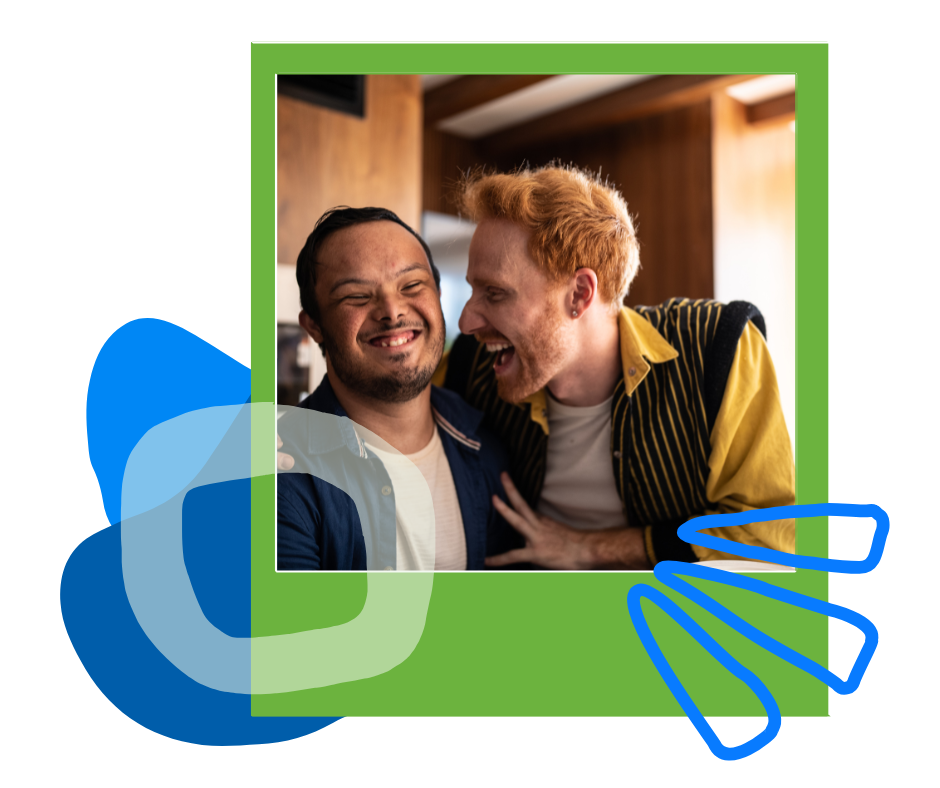
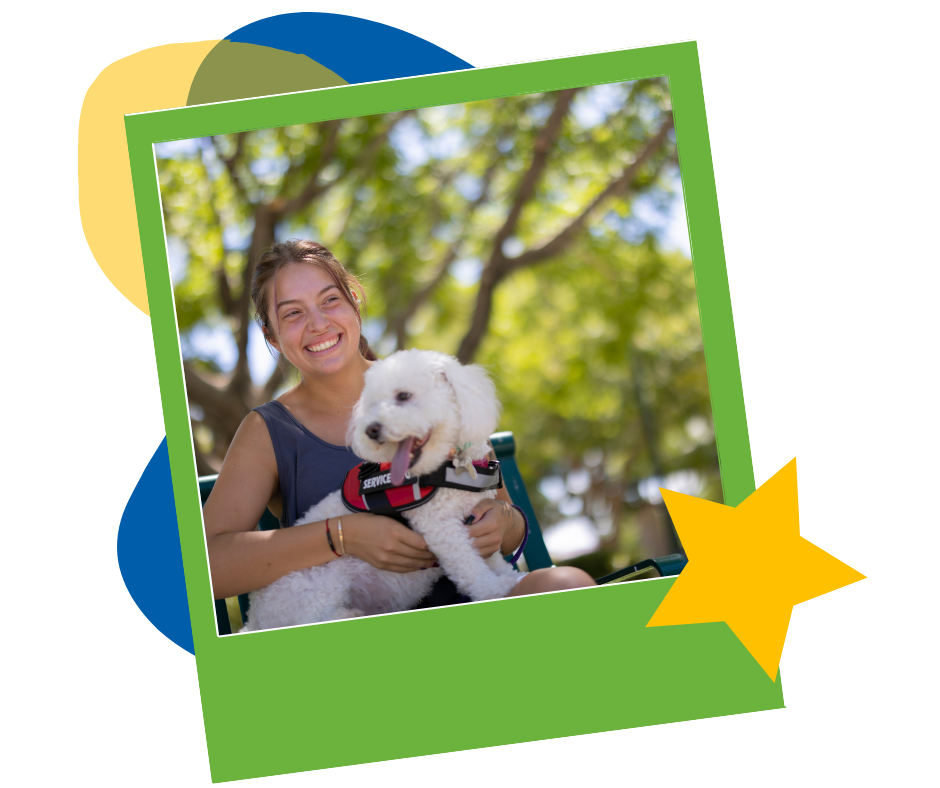
>> Unless otherwise noted, all images and names represent real Members but actual images and names have not been used for privacy reasons. <<